I. What is Oxford Fabric?
Oxford fabric is a functional woven textile renowned for its durability, abrasion resistance, structural stability, and ease of maintenance. Its defining characteristic is its distinctive weave structure.
1. Core Weave Structure (Oxford Weave):
– Construction: Typically a variant of basket weave or panama weave.
– Yarn Configuration: Warp yarns use two or more fine plied threads, while weft yarns employ a single coarser thread.
– Effect: Creates a characteristic pebbled or checkerboard texture, resulting in a flat surface with visible interlacing points. The tight structure yields high toughness.
2. Origin: Named after Oxford University, where it gained popularity for student shirts in the 19th century.
II. Key Properties (Industry Focus)
1. Durability & Abrasion Resistance: Superior resistance to scuffs, scratches, and wear; ideal for backpacks, suitcases, and travel gear.
2. Structural Stability: Minimal deformation or wrinkling; maintains shape rigidity.
3. Ease of Maintenance: Stain-resistant (especially post-treatment), easy to clean (wipe/wash).
4. Load-Bearing Capacity: High-density weaves (e.g., high denier) support heavy loads.
5. Water Resistance (Optional):
– Coatings: PVC (cost-effective, waterproof; stiff, less eco-friendly), PU (softer, eco-conscious, breathable), TPU/TPE (eco-friendly, flexible).
– Laminates: TPU film (high-end waterproof breathable membranes).
– Finishes: DWR (Durable Water Repellent) treatment for beading effect.
6. Cost-Effectiveness: More economical than nylon (e.g., Cordura®) or technical polyesters.
7. Color Fastness & Printability: Excellent dye affinity, vibrant colors, high color retention.
III. Primary Fiber Composition
1. Polyester (PET): Industry dominant. High strength, abrasion resistance, low cost, and colorfastness.
2. Nylon (PA): Superior strength-to-weight ratio and softness; higher cost, lower UV resistance. Used for premium/outdoor bags.
3. Cotton: Rare in modern luggage due to poor abrasion resistance, wrinkling, and weight. Limited to vintage styles/lining.
4. Blends (e.g., Poly-cotton): Uncommon in functional luggage.
IV. Key Specifications (Procurement Criteria)
1. Denier (D):
– Indicates yarn thickness. Higher denier = thicker, heavier, more durable fabric.
– Common Ranges:
– Lightweight: 150D, 210D (sling bags, linings)
– General Use: 300D, 420D, 600D (backpacks, duffels, laptop cases)
– Heavy-Duty: 900D+, 1680D (suitcases, military/tool bags)
– Note: Denier typically references warp yarn (e.g., “600D Oxford”).
2. Ply Count (e.g., 2×2, 3×1):
– Denotes yarn twisting (e.g., 2×2 = 2-ply warp + 2-ply weft). Higher ply = greater thickness/durability.
3. Thread Count (Density):
– Threads per inch (TPI) or per 10cm (e.g., 190T). Higher density = tighter weave, better abrasion/water resistance.
4. Grammage (GSM/g/m²):
– Weight per square meter. Correlates with thickness/density (affected by coatings).
| Denier | Ply | Characteristics | Typical Applications |
| 150D | 1×1 | Lightweight, flexible | Lining, lightweight totes |
| 210D | 1×1 | Light,moderate strength | Daypacks, shopper bags |
| 300D | 1×1/2×2 | Balanced versatility | Daily backpacks, laptop sleeves |
| 420D | 1×1/2×2 | Dense, enhanced abrasion | Travel bags, suitcase lining |
| 600D | 2×2 | Industry standard | Suitcases, tool bags, duffels |
| 900D+ | 2×2/3×1 | Ultra-heavy-duty | Hardcase shells, expedition gear |
V. Finishing Processes
1. Coatings:
– PVC: Budget luggage shells.
– PU: Industry standard (bags, suitcase lining).
– TPU/TPE: Premium eco-friendly options.
2. Laminates: TPU membranes (high-end waterproof breathable bags).
3. Calendering: Heat-pressing for smoothness/water resistance.
4. Printing: Pre/post-coating applications.
5. Flame-Retardant/UV-Resistant Finishes: Specialty requirements.
VI. Luggage Applications
– Backpacks: All segments (student, travel, outdoor).
– Suitcases:
– Hard-shell: 600D+ PVC/PU (abrasion-resistant exterior).
– Soft-shell: 420D-600D PU (main fabric).
– Lining: 210D-300D calendered/PU Oxford (ticketing).
– Duffels/Totes/Storage Bags: Water-resistant variants.
– Tool/Equipment Cases: 600D+ with PVC reinforcement.
The following are the products made by our company with Oxford cloth as the main material:
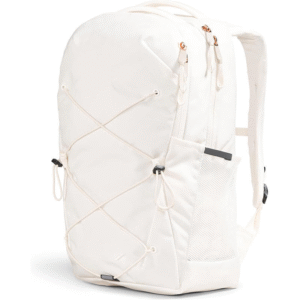
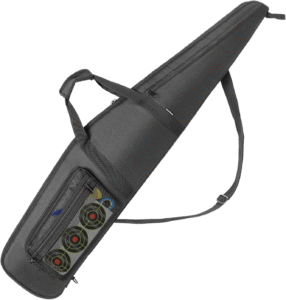
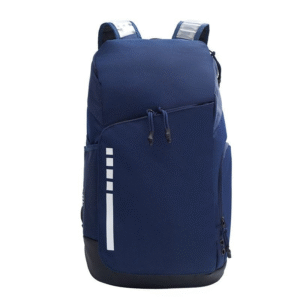
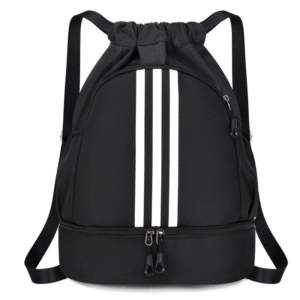
For more products, please visit our company’s homepage
VII. Pros & Cons Summary
| Advantages | Disadvantages |
| Exceptional abrasion resistance | Not inherently waterproof |
| Shape retention | Stiff hand feel (high denier/coating) |
| Easy cleaning | Low breathability (coated fabrics) |
| Cost-effective (polyester-based) | PVC environmental concerns |
| Vibrant color options | Weight (high-density/coated types) |